Product Line | Kluwer Law International |
|---|---|
Product SKU | 10058316-0001 |
ISBN-13 | 9789041198938 |
Availability | Ships in 3-5 Business Days |
Last Updated | 2001-01-01 |
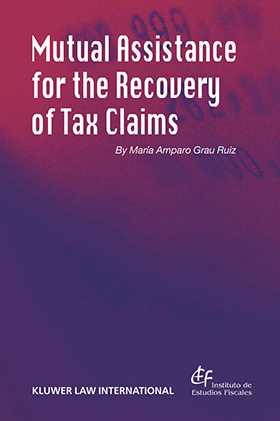
What is required, Professor Amparo Grau proclaims in this extremely well-thought-out book, is adequate regulation of mutual assistance for the recovery of tax claims. It is essential to "internationalize" the link between the power to levy taxes and the power to actually enforce them. In international relations as currently established, the most promising way to achieve effective enforcement in the recovery of tax claims is through the mechanism of mutual assistance – an administrative function that tends to become mired in highly complex webs of procedure.
Mutual Assistance for the Recovery of Tax Claims offers an in-depth analysis of the potential powers and necessary limits of the mutual assistance function at the national administrative level. This entails close examination of the issues that so often turn out to be the most problematic, such as whether or not claims enforced through mutual assistance merit priority and the validity of the foreign authority's right to enforce.
This detailed investigation alone, with its clear highlighting of the crucial challenges, would be enough to make this book enormously valuable; but Professor Amparo Grau goes further by offering recommendations that contribute to the strengthening and effectiveness of mutual assistance procedures. She also considers the growing role of multilateral treaties in the field, and even envisions the possibility of an international fiscal court.
I: Concept, Foundation, Nature and Categories of Mutual Assistance for the Recovery of Tax Claims
I. An Approach to the Concept of Mutual Assistance
II. Foundations of Mutual Assistance for the Recovery of Tax Claims
III. The Legal Nature of Mutual Assistance
IV. Categories of Mutual Assistance in Taxation
II: The Power to Request Assistance for the Recovery of Tax Claims and the Obligation to Lend Such Assistance
Part One. The Power to Request Assistance for the Recovery of Tax Claims
I. The Power to Request Assistance
II. Scope of the Power to Request Assistance
III. What Entities or Bodies Are Competent to Request Assistance?
IV. The Public Purpose of the Power to Request Mutual Assistance
V. Requirements for Exercise of the Power to Request Assistance for the Recovery of Tax Claims
Part Two. The Obligation to Lend Assistance for the Recovery of Tax Claims
I. Origin of the Obligation to Lend Assistance
II. Subjective Elements
III. The Extent of the Obligation to Lend Assistance
IV. Extinguishment of the Obligation to Lend Mutual Assistance
III: Production and Application of Rules on Mutual Assistance
Part One. Sources of Mutual Assistance in Tax Matters
I. Origin and Production of Rules on Mutual Assistance
II. The Traditional Hegemony of Bilateral Instruments
III. The New Stress on Multilateral Instruments
Part Two. Application of the Norms on Mutual Assistance
I. Interaction, Interpretation and Application of the Norms on Mutual Assistance
IV: Special Features of Enforced Collection Procedure Deriving from Mutual Assistance
I. Subjective Requirements
II. Objective Requirements
III. Requirements for Action
IV. Opposition by the Taxpayer
Latest Developments
Annexes
Index
 NEED HELP FINDING THE RIGHT SOLUTION?
Call sales at 1-800-638-8437
HAVE A QUESTION?


These cookies are necessary for the website to function. They are usually set in response to actions made by you which amount to a request for services, such as setting your privacy preferences, logging in or filling in forms. You can set your browser to block or alert you about these cookies, this may have an effect on the proper functioning of (parts of) the site.
These cookies enable the website to provide enhanced functionality, user experience and personalization, and may be set by us or by third party providers whose services we have added to our pages. If you do not allow these cookies, then some or all of these services may not function properly.
These cookies support analytic services that measure and improve the performance of our site. They help us know which pages are the most and least popular and see how visitors move around the site.
These cookies may collect insights to issue personalized content and advertising on our own and other websites, and may be set through our site by third party providers. If you do not allow these cookies, you may still see basic advertising on your browser that is generic and not based on your interests.
