Product Line | Kluwer Law International |
|---|---|
ISBN-13 | 9789403535166 |
Availability | Ships in 3-5 Business Days |
Last Updated | 2023-04-2 |
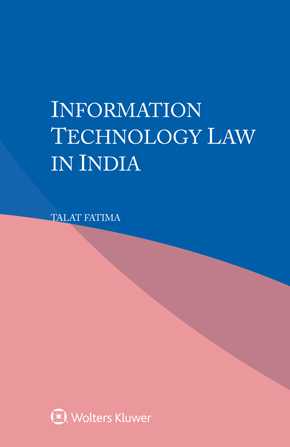
Derived from the renowned multi-volume International Encyclopaedia of Laws, this practical guide to information technology law – the law affecting information and communication technology (ICT) – in India covers every aspect of the subject, including the regulation of digital markets, intellectual property rights in the digital context, relevant competition rules, drafting and negotiating ICT-related contracts, electronic transactions, and cybercrime. Lawyers who handle transnational matters will appreciate the detailed explanation of specific characteristics of practice and procedure.
Following a general introduction, the monograph assembles its information and guidance in six main areas of practice: (1) the regulatory framework of digital markets, including legal aspects of standardization, international private law applied to the online context, telecommunications law, regulation of audio-visual services and online commercial platforms; (2) online public services including e-government, e-health and online voting; (3) contract law with regard to software, hardware, networks and related services, with special attention to case law in this area, rules with regard to electronic evidence, regulation of electronic signatures, online financial services and electronic commerce; (4) software protection, legal protection of databases or chips, and other intellectual property matters; (5) the legal framework regarding cybersecurity and (6) the application of criminal procedure and substantive criminal law in the area of cybercrime.
Its succinct yet scholarly nature, as well as the practical quality of the information it provides, make this monograph a valuable time-saving tool for business and legal professionals alike. Lawyers representing parties with interests in India will welcome this very useful guide, and academics and researchers will appreciate its value in the study of comparative law in this relatively new and challenging field.
The Author
List of Abbreviations
Preface
General Introduction
Chapter 1. General Background
Chapter 2. Telecommunications Infrastructure
Chapter 3. The Information and Communications Technology Market
Chapter 4. E-commerce: Facts and Figures
Chapter 5. E-government Initiatives
Part I. Digital Market Regulation
Chapter 1. Legal Status of Standards and Technical Specifications (Non-binding Self-Regulation)
Chapter 2. Legal Status of Standard Terms and Conditions
Chapter 3. International Private Law Applied to the Online Environment
Chapter 4. Competition Law Applied to the Digital Market
Chapter 5. Regulation of the Electronic Communications Market (“Telecommunications Law”)
Chapter 6. Regulation of Broadcasting Activities (Audio-Visual Services)
Chapter 7. Regulation of Online Interactive Services (Electronic Commerce, Online Platforms, B2B Platforms)
Chapter 8. Regulation of Cryptography and Dual-Use Goods
Part II. Online Public Services
Chapter 1. E-government Legal Framework
Chapter 2. Legal Framework for E-Health
Chapter 3. Online Voting
Chapter 4. Other E-government Services
Part III. Online Transactions
Chapter 1. Electronic Contracting (Incl. Smart Contracts and Blockchain)
Chapter 2. Electronic Signatures
Chapter 3. Trust Services (Certificates, Electronic Mail Services, Etc.)
Chapter 4. Online Financial Services
Chapter 5. Law of Evidence in the Digital Environment (Incl. Rules Regarding Electronic Archiving)
Chapter 6. Consumer Protection (Online Sales and Online Services)
Chapter 7. Liability of Online Service Providers
Part IV. Intellectual Rights (“Digital Rights”)
Chapter 1. Patent Law
Chapter 2. Trademarks (Application in the Digital Context)
Chapter 3. Design Protection (Application to Digital Products)
Chapter 4. Copyright Protection in the Digital Context
Chapter 5. Legal Protection of Software
Chapter 6. Protection of Databases (Incl. “Data Ownership”)
Chapter 7. Chips Protection
Chapter 8. Protection of Internet Domain Names
Part V. Cybersecurity Law
Chapter 1. Institutional Framework
Chapter 2. Sector-Specific Obligations (E.g., Financial Sector, Health Sector, Etc.)
Chapter 3. Liability and Remedies
Part VI. Cybercrime
Chapter 1. Application of International and Regional Agreements (E.g., Status of the Council of Europe Cybercrime Convention, Law Enforcement Cooperation Agreements, Etc.)
Chapter 2. Specific Computer Crimes (Unlawful Access, Identity Theft, Online Fraud, Online Sabotage, Forgery)
Chapter 3. Traditional Crimes in a Digital Context
Chapter 4. Criminal Procedural Aspects (Incl. Data Retention, Interception of Electronic Communications, Network Search, Seizure of Data, Duties of Intermediaries)
Selected Bibliography
Index
 NEED HELP FINDING THE RIGHT SOLUTION?
Call sales at 1-800-638-8437
HAVE A QUESTION?


These cookies are necessary for the website to function. They are usually set in response to actions made by you which amount to a request for services, such as setting your privacy preferences, logging in or filling in forms. You can set your browser to block or alert you about these cookies, this may have an effect on the proper functioning of (parts of) the site.
These cookies enable the website to provide enhanced functionality, user experience and personalization, and may be set by us or by third party providers whose services we have added to our pages. If you do not allow these cookies, then some or all of these services may not function properly.
These cookies support analytic services that measure and improve the performance of our site. They help us know which pages are the most and least popular and see how visitors move around the site.
These cookies may collect insights to issue personalized content and advertising on our own and other websites, and may be set through our site by third party providers. If you do not allow these cookies, you may still see basic advertising on your browser that is generic and not based on your interests.
