.png)
These cookies are necessary for the website to function. They are usually set in response to actions made by you which amount to a request for services, such as setting your privacy preferences, logging in or filling in forms. You can set your browser to block or alert you about these cookies, this may have an effect on the proper functioning of (parts of) the site.
These cookies enable the website to provide enhanced functionality, user experience and personalization, and may be set by us or by third party providers whose services we have added to our pages. If you do not allow these cookies, then some or all of these services may not function properly.
These cookies support analytic services that measure and improve the performance of our site. They help us know which pages are the most and least popular and see how visitors move around the site.
These cookies may collect insights to issue personalized content and advertising on our own and other websites, and may be set through our site by third party providers. If you do not allow these cookies, you may still see basic advertising on your browser that is generic and not based on your interests.

Product Line | Kluwer Law International |
|---|---|
Product SKU | 10058795-0001 |
ISBN-13 | 9789041126412 |
Availability | Ships in 3-5 Business Days |
Last Updated | 2008-02-04 |
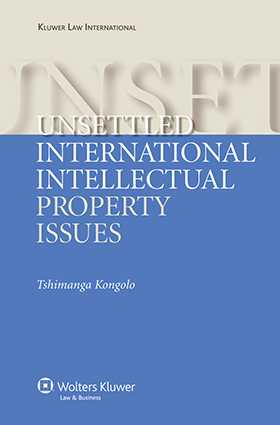
The interface between intellectual property and other fields, such as public health and biotechnology, has raised expectations from both developed and developing countries. At the same time, a variety of issues have arisen from these relationships. Debates over public health, protection of traditional knowledge and traditional cultural expressions or expressions of folklore, and the control of biological resources and access to genetic resources pose major challenges to the current global system of intellectual property. This thoughtful book serves not only to contribute to these ongoing debates but also, through in-depth analysis and well-grounded recommendations, to move them closer to resolution in a manner beneficial to all interested parties. Among the matters discussed are the following:
Drawing on prodigious familiarity with relevant conventions and
international legal instruments in the field and debates on these issues as
carried out under international bodies – including the World Trade
Organization (WTO), the World Intellectual Property Organization (WIPO), the
Food and Agriculture Organization (FAO), the International Union for the
Protection of New Varieties of Plants (UPOV) and the World Health Organization
(WHO), as well as the Convention on Biological Diversity (CBD) and the African
Model Legislation – the author offers clear, well-thought-out proposals on how
to respond to these issues. In the same vein, the author makes a number of
proposals on how to strike a balance between the exclusive rights of the
patentee and the right to public health or access to medicines, especially in
the context of the HIV/AIDS crisis. In addition, holding that the owners or
possessors of traditional knowledge or traditional cultural expressions or
expressions of folklore are entitled to intellectual property rights
protection, he advocates the development of a global and binding international
‘protection instrument’ that takes particular features of these rights into
consideration. He proposes the extension of the scope of applicability of the
requirement of the disclosure of the country of origin of genetic resources,
both at the international and national levels. He also proposes refinements to
the system for multilateral notification and registration of geographical
indications in respect to wine and spirits and the extension of the higher
protection of geographical indications to other products and suggests new ways
to approach unsettled issues arising from the use of marks or other signs on
the Internet.
As a deeply informed analysis of how to integrate intellectual property rights into the international development process, this book takes some giant steps toward the general recognition of the real parameters of the most severe problems plaguing the developing world and offers reachable measures toward significant improvement of those problems. It will be of interest to all professionals, officials, and academicsconcerned with the equitable administration of intellectual property rights.
Introduction.
1. Intellectual Property and Public Health.
2. Intellectual Property, Traditional Knowledge and Traditional Cultural Expressions or Expressions of Folklore.
3. Protection of New Plant Varieties, Biodiversity and Access to Genetic Resources.
4. Issues Relating to the Use of Marks and Other Signs on the Internet.
5. Challenges in Respect to Protection of Geographical Indications.
General Conclusion.
Appendices:
1. Amendment of the TRIPs Agreement.
2. Recommendations of the Commission on Intellectual Property Rights, Innovation and Public Health.
3. The Protection of Traditional Knowledge: Revised Objectives and Principles: Policy Objectives.
4. Protection of Traditional Cultural Expressions or Expressions of Folklore: Revised Objectives and Principles: Objectives.
5. FAO’s International Treaty on Plant Genetic Resources for Food and Agriculture
6. African Model Legislation for the Protection of the Rights of Local Communities, Farmers and Breeders, and for the Regulation of Access to Biological Resources.
Call sales at 1-800-638-8437