Product Line | Kluwer Law International |
|---|---|
Product SKU | 10058474-0001 |
ISBN-13 | 9789041160140 |
Availability | Ships in 3-5 Business Days |
Last Updated | 2015-03-11 |
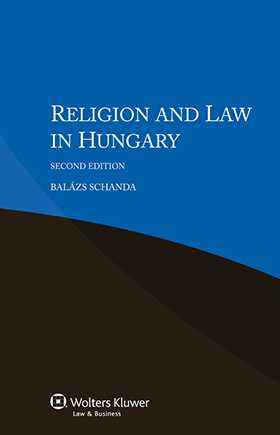
Derived from the renowned multi-volume International Encyclopaedia of Laws, this convenient resource provides systematic information on how Hungary deals with the role religion plays or can play in society, the legal status of religious communities and institutions, and the legal interaction among religion, culture, education, and media.
After a general introduction describing the social and historical background, the book goes on to explain the legal framework in which religion is approached. Coverage proceeds from the principle of religious freedom through the rights and contractual obligations of religious communities; international, transnational, and regional law effects; and the legal parameters affecting the influence of religion in politics and public life. Also covered are legal positions on religion in such specific fields as church financing, labour and employment, and matrimonial and family law. A clear and comprehensive overview of relevant legislation and legal doctrine make the book an invaluable reference source and very useful guide.
Succinct and practical, this book will prove to be of great value to practitioners in the myriad instances where a law-related religious interest arises in Hungary. Academics and researchers will appreciate its value as a thorough but concise treatment of the legal aspects of diversity and multiculturalism in which religion plays such an important part.
The Author.
List of Abbreviations.
List of Important Sources of Law.
Preface.
General Introduction.
Part I. Legal Framework and Sources.
Chapter 1. Constitutional Position of Religion.
Chapter 2. Other Legislation with Regard to Religion.
Chapter 3. Typology of the System.
Part II. Religious Freedom in General.
Chapter 1. Individual Religious Freedom.
Chapter 2. Collective Religious Freedom.
Chapter 3. Organizational Religious Freedom.
Part III. Legal Status of Religious Communities.
Chapter 1. Formal Status of Religious Communities.
Chapter 2. Autonomy of Religious Communities.
Chapter 3. Fundamental Rights and Religious Communities.
Chapter 4. Contractual Religious Freedom.
Part IV. International, Transnational, Regional Effects on Religious Communities.
Chapter 1. International Law Effects on Religious Communities.
Chapter 2. Transnational Law Effects on Religious Communities.
Chapter 3. Regional Law Effects on Religious Communities.
Part V. Religion and Politics.
Chapter 1. Religion Influence in Politics.
Chapter 2. Political Influence in Religion.
Chapter 3. Interaction between Religion and State on a Political and Legal Level.
Part VI. Labour Law within Religious Communities.
Chapter 1. Scope of Application of Labour Law.
Chapter 2. Religious Ministers and Labour Law.
Chapter 3. Other Church Employees and Labour Law
Part VII. Religious Communities and Protections of the Individual.
Chapter 1. Protection of Privacy.
Chapter 2. Freedom to Marry.
Chapter 3. Freedom of Expression.
Chapter 4. Due Process Norms and Religious Groups.
Chapter 5. Professional Secrecy.
Chapter 6. Medical Deontology.
Chapter 7. Non-discrimination.
Chapter 8. Penal Law and Religion.
Part VIII. Church Financing.
Chapter 1. Direct Financing of Religious Communities.
Chapter 2. Indirect Financing of Religious Communities.
Part IX. Education.
Chapter 1. Religious Education in Public and Private Schools.
Chapter 2. Religious Schools.
Part X. Matrimonial and Family Law.
Chapter 1. Legal Position of Religious Marriage.
Chapter 2. Legal Position of Religious Family Law.
Part XI. Religion and Culture.
Chapter 1. Religion and Art.
Chapter 2. Religion and Media.
Chapter 3. Religion and Civil Society.
Chapter 4. Religion and Public Debate.
Selected Bibliography.
Index.
 NEED HELP FINDING THE RIGHT SOLUTION?
Call sales at 1-800-638-8437
HAVE A QUESTION?


These cookies are necessary for the website to function. They are usually set in response to actions made by you which amount to a request for services, such as setting your privacy preferences, logging in or filling in forms. You can set your browser to block or alert you about these cookies, this may have an effect on the proper functioning of (parts of) the site.
These cookies enable the website to provide enhanced functionality, user experience and personalization, and may be set by us or by third party providers whose services we have added to our pages. If you do not allow these cookies, then some or all of these services may not function properly.
These cookies support analytic services that measure and improve the performance of our site. They help us know which pages are the most and least popular and see how visitors move around the site.
These cookies may collect insights to issue personalized content and advertising on our own and other websites, and may be set through our site by third party providers. If you do not allow these cookies, you may still see basic advertising on your browser that is generic and not based on your interests.
