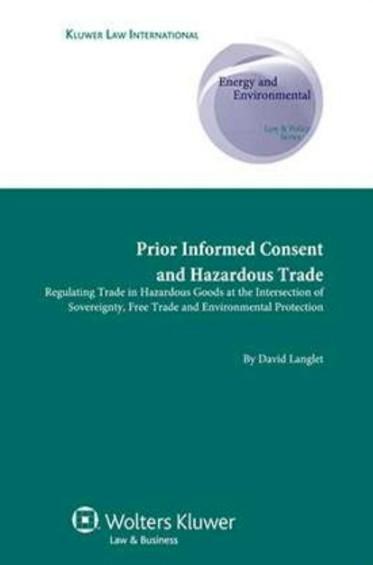
Product Line | Kluwer Law International |
|---|---|
Product SKU | 10059408-0001 |
ISBN-13 | 9789041128218 |
Availability | Ships in 3-5 Business Days |
Last Updated | 2009-02-18 |
Energy and Environmental Law and Policy Series
Over the past twenty years or so several global and regional agreements have emerged to address the problems associated with international shipments of hazardous substances. Such agreements are found in three main areas covering three categories of goods: hazardous wastes (Basel convention, Bamako convention, and a number of regional agreements), certain chemicals (Rotterdam Convention), and genetically modified organisms (Cartagena Protocol).
This ground-breaking study is the first book to take a comprehensive approach to the subject of transboundary shipments of hazardous substances and the instruments employed for regulating such shipments. It fully explains which types of trade regulating instruments are employed by which agreements, and then goes on to evaluate the pros and cons of these instruments with respect to their compatibility with international legal norms, especially WTO law. For the first time in any book, the various international legal regimes (hazardous waste, hazardous chemicals, and biosafety) are compared, based on such criteria as the following:
At the heart of the thesis is a recognition that the concept of prior informed consent (PIC) – a relatively new instrument for controlling international trade flows – has become a central tenet in hazardous trade regulation. The author demonstrates that PIC seems to offer a promising way to strengthen the ability to protect the environment and human health without unnecessarily impeding the free flow of goods, thus effectively addressing persistent conflicts between trade and environmental protection. Taken in conjunction with other trade-regulating measures, his analysis assesses the PIC concept/procedure from three perspectives: its effect on state sovereignty, its potential for enhancing environmental and health protection in importing states, and its relationship with the free-trade regime, represented primarily by the GATT and the SPS and TBT Agreements of the WTO.
The analysis also includes coverage of the pertinent export laws of the EU and the United States, and of the export and import laws of India pertaining to potentially hazardous substances and products.
Prior Informed Consent and Hazardous Trade vividly clarifies the objectives pursued by the international regulation of trade in hazardous substances – to strengthen regulatory control, to protect human health and the environment, and to prevent unjustified impediments to free trade. In its deeply-informed assessment of the relative weight attributed to each of these objectives, and in its keen analysis of the implications of that weighing on effective decision-making capacity with respect to hazardous trade, this book will be of immeasurable value to lawyers, policymakers and academics working with issues related to transboundary movements of hazardous substances, and especially with conflicts between trade and environmental protection.
List of Tables
Acknowledgements
Abbreviations
Part I: Issues and Concepts
1. Introduction
2. International Law Premises
3. Sovereignty
4. Hazardous Trade as Transboundary Harm
Part II: Hazardous-Trade Regimes
5. The Hazardous-Waste Regime
6. The Hazardous-Chemicals Regime
7. The Biosafety Regime
8. Comparison and Analysis of the Hazardous-Trade Regimes
Part III: The Free-Trade Regime
9. Free-Trade Law
10. WTO Law
11. Conflicts between the Environmental Regime and the Free-Trade Regime
Part IV: Analysis and Reflections
12. Objectives and Regulatory Instruments
13. Further Aspects of PIC
14. General Conclusions
Tables of Materials
Treaties and Laws
Cases
Bibliography
Official Documents
Miscellaneous
Index
 NEED HELP FINDING THE RIGHT SOLUTION?
Call sales at 1-800-638-8437
HAVE A QUESTION?


These cookies are necessary for the website to function. They are usually set in response to actions made by you which amount to a request for services, such as setting your privacy preferences, logging in or filling in forms. You can set your browser to block or alert you about these cookies, this may have an effect on the proper functioning of (parts of) the site.
These cookies enable the website to provide enhanced functionality, user experience and personalization, and may be set by us or by third party providers whose services we have added to our pages. If you do not allow these cookies, then some or all of these services may not function properly.
These cookies support analytic services that measure and improve the performance of our site. They help us know which pages are the most and least popular and see how visitors move around the site.
These cookies may collect insights to issue personalized content and advertising on our own and other websites, and may be set through our site by third party providers. If you do not allow these cookies, you may still see basic advertising on your browser that is generic and not based on your interests.
