Product Line | Kluwer Law International |
|---|---|
ISBN-13 | 9789403510477 |
Availability | Ships in 5-7 Business Days |
Last Updated | 2025-01-22 |
Studies in Employment and Social Policy
About this book:
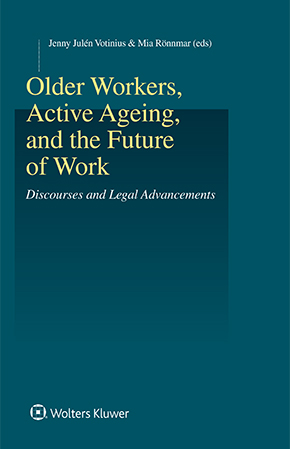
Older Workers, Active Ageing, and the Future of Work is a significant book that provides a comparative and comprehensive analysis of legislative developments and discourses relating to older workers, prolonged working lives, and the future of work, which are addressed under the themes of fundamental rights developments, dynamics in non-discrimination and employment protection, and advancements in active ageing. The major trend of population ageing that can be seen in the European Union (EU) and most other advanced economies has a substantial impact on social cohesion, intergenerational solidarity, economic development and the long-term sustainability of health and pension systems. For labour law, industrial relations, and collective bargaining, the implications of the ageing workforce pose specific challenges.
What’s in this book:
Eminent international scholars furnish an expert analysis of current societal, policy, legislative, and case law developments. The contributions address core issues in labour law, non-discrimination law, elder law, and EU law and cover topical developments in Australia, Brazil, Japan, Sweden, the United Kingdom and the EU, including:
How this will help you:
With its interdisciplinary approach and multitude of theories, conceptual frameworks, methodologies, and materials, this inspiring book presents a multifaceted and comparative analysis of discourses and legal trends related to older workers, active ageing, and the future of work for practitioners in labour and employment law globally, and also for academics and policymakers in those fields.
Editors
Contributors
PART I
Introduction
CHAPTER 1
Ageing in the World of Work
Jenny Julén Votinius & Mia Rönnmar
PART II
Fundamental Rights Developments
CHAPTER 2
Human Rights Protection of Older Persons: The Case for a New Convention?
Martina Axmin
CHAPTER 3
The European Social Charter and Rights for Older Workers
Birgitta Nyström
CHAPTER 4
Fundamental Social Rights and the EU Charter in Times of Crisis: Reality and Prospects
Xavier Groussot & Alezini Loxa
PART III
Dynamics in Non-discrimination and Employment Protection
CHAPTER 5
Strategic Litigation, Discrimination Law, and Older Workers
Jenny Julén Votinius
CHAPTER 6
Modernizing EU Anti-discrimination Law to Better Combat Discrimination Against Older Workers in the Context of ‘Just Transition’
Sophie Robin-Olivier
CHAPTER 7
Dismissed Older Workers at Conceptual and Legal Crossroads: An Interplay Between Employment Protection, Non-discrimination, and Collective Bargaining
Mia Rönnmar
CHAPTER 8
Older Workers, Unfair Dismissal, and Age Discrimination Law: Strengthening Employment Protection? Comparative Perspectives from Australia and the UK
Alysia Blackham
CHAPTER 9
The Capability Approach, Compulsory Retirement, and the Hörnfeldt Case Revisited
Ann Numhauser-Henning
PART IV
Advancements in Active Ageing
CHAPTER 10
Slavery of Ageing Domestic Workers: An Analysis of the Policies in Brazil
Ana Virginia Moreira Gomes & Afonso de Paula Pinheiro Rocha
CHAPTER 11
Japan’s Elderly Employment Promotion Policy Without Anti-age Discrimination Law: Experiments in a Most Rapidly Ageing Country
Takashi Araki
CHAPTER 12
Telework, Sustainability of Pensions, and Synergies with Markets Institutions: Constructing a Theory of Fundamental Rights
Julia López López, Núria Pumar Beltrán & Eusebi Colàs-Neila
Table of Cases
 NEED HELP FINDING THE RIGHT SOLUTION?
Call sales at 1-800-638-8437
HAVE A QUESTION?


These cookies are necessary for the website to function. They are usually set in response to actions made by you which amount to a request for services, such as setting your privacy preferences, logging in or filling in forms. You can set your browser to block or alert you about these cookies, this may have an effect on the proper functioning of (parts of) the site.
These cookies enable the website to provide enhanced functionality, user experience and personalization, and may be set by us or by third party providers whose services we have added to our pages. If you do not allow these cookies, then some or all of these services may not function properly.
These cookies support analytic services that measure and improve the performance of our site. They help us know which pages are the most and least popular and see how visitors move around the site.
These cookies may collect insights to issue personalized content and advertising on our own and other websites, and may be set through our site by third party providers. If you do not allow these cookies, you may still see basic advertising on your browser that is generic and not based on your interests.
