Product Line | Kluwer Law International |
|---|---|
ISBN-13 | 9789403534060 |
Availability | Ships in 3-5 Business Days |
Last Updated | 2023-05-15 |
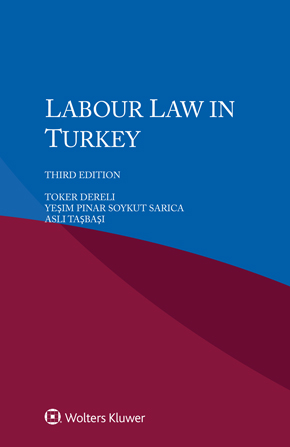
Derived from the renowned multi-volume International Encyclopaedia of Laws, this monograph on Turkey not only describes and analyses the legal aspects of labour relations, but also examines labour relations practices and developing trends. It provides a survey of the subject that is both usefully brief and sufficiently detailed to answer most questions likely to arise in any pertinent legal setting.
Both individual and collective labour relations are covered in ample detail, with attention to such underlying and pervasive factors as employment contracts, suspension of the contracts, dismissal laws and covenant of non-competition, as well as international private law. The author describes all important details of the law governing hours and wages, benefits, intellectual property implications, trade union activity, employers’ associations, workers’ participation, collective bargaining, industrial disputes, and much more.
Building on a clear overview of labour law and labour relations, the book offers practical guidance on which sound preliminary decisions may be based. It will find a ready readership among lawyers representing parties with interests in Turkey, and academics and researchers will appreciate its value in the study of comparative trends in laws affecting labour and labour relations.
The Authors
List of Abbreviations
Acknowledgements
General Introduction
Chapter 1. The General Background
Chapter 2. Categories and Definitions of Social Law
Chapter 3. Historical Background of Labour Law and Industrial Relations in Turkey
Chapter 4. Sources of Turkish Labour Law
Chapter 5. The Ministry of Labour and Social Security: Organization and Functions
Part I. The Individual Employment Relationship
Chapter 1. Definitions, Concepts and Scope of Turkish Labour Law
Chapter 2. The Individual Employment Contract
Chapter 3. Duties of the Parties in the Course of the Employment Relationship
Chapter 4. Organization of Work and Working Time
Chapter 5. Remuneration
Chapter 6. Weekly Rest Day, Paid Vacations and Annual Leave with Pay
Chapter 7. The Suspension of the Execution of the Individual Employment Contract
Chapter 8. The Ending of the Individual Employment Contract: Expiration, Termination
Chapter 9. Severance Pay
Chapter 10. Inventions by Employees: Settlement of Individual Labour Disputes – Labour Courts
Part II. Collective Labour Relations
Chapter 1. Union Freedom (Freedom of Association)
Chapter 2. Labour Unions and Employers’ Unions
Chapter 3. Closing, Suspension and Dissolution
Chapter 4. Basic Facts on Major Labour Confederations
Chapter 5. Collective Bargaining
Chapter 6. Main Features of Collective Labour Agreements
Chapter 7. Settlement of Collective Labour Disputes
Chapter 8. Industrial Conflict; Strikes and Lock-Outs and Their Exceptions
Chapter 9. Collective Rights Disputes, Labour Courts and Arbitration
Chapter 10. Public Servants’ Right to Organize and to Bargain Collectively
Chapter 11. Some Current Practices and Problems of Industrial Relations in Turkey
Concluding Remarks
Selected Bibliography
Table of Cases
Table of Legislation
Table of Statutes
Index
 NEED HELP FINDING THE RIGHT SOLUTION?
Call sales at 1-800-638-8437
HAVE A QUESTION?


These cookies are necessary for the website to function. They are usually set in response to actions made by you which amount to a request for services, such as setting your privacy preferences, logging in or filling in forms. You can set your browser to block or alert you about these cookies, this may have an effect on the proper functioning of (parts of) the site.
These cookies enable the website to provide enhanced functionality, user experience and personalization, and may be set by us or by third party providers whose services we have added to our pages. If you do not allow these cookies, then some or all of these services may not function properly.
These cookies support analytic services that measure and improve the performance of our site. They help us know which pages are the most and least popular and see how visitors move around the site.
These cookies may collect insights to issue personalized content and advertising on our own and other websites, and may be set through our site by third party providers. If you do not allow these cookies, you may still see basic advertising on your browser that is generic and not based on your interests.
