Product Line | Kluwer Law International |
|---|---|
Product SKU | 10057990-0002 |
ISBN-13 | 9789041138149 |
Availability | Ships in 5-7 Business Days |
Last Updated | 2019-10-21 |
About this book:
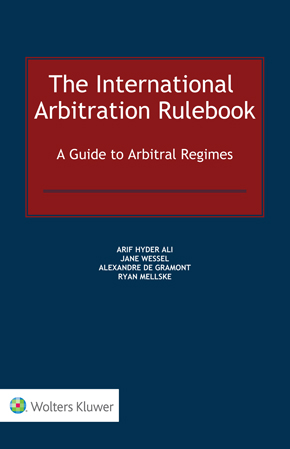
The International Arbitration Rulebook is a comprehensive, descriptive and analytical “road map” to international commercial and investment arbitration rules. Numerous arbitral regimes around the world differ in subtle yet complex ways. These variations can have a profound effect on the procedural rights and obligations of the parties. Broadly speaking, the choice of regime will impact the way in which an arbitration is conducted; its duration and expense; the outcome of the dispute; and the ultimate enforceability of the award. To inform the parties’ choice, this book is the first to deal specifically and in depth with a broad range of institutional and ad hoc arbitration rules on a comparative basis. It provides a practical guide to the rules in one book from a distinctly “rule” and “guide” point of view.
What’s in this book:
This book has its genesis in the authors’ experience as practitioners and educators in international commercial and investor-state arbitration and as advisers to, and trainers for, arbitral institutions, arbitrators, judges and government officials around the world. This book covers the broad range of issues addressed in nine representative major sets of arbitration rules. The authors detail the distinct ways in which rules governing such important issues as the following may differ among the various arbitral regimes:
This book serves to plug the gap between the treatises that exist on one particular institution and supported by rule comparison tables and clear explanations of each step of the process that provide no more than a starting point for insight into what the differences between those rules mean in reality or how the rules are applied in practice.
How this will help you:
With this eminently practical book, contract negotiators, counsel and arbitrators can confidently navigate any international arbitration. Thorough coverage of the applicable rules and guidelines enables parties and/or the tribunal to design bespoke arbitration procedures based upon the various rules of leading regimes. Arbitral institutions can survey the different approaches and identify emerging best practices in the designing and drafting of arbitral regimes. Designed to cover the broad range of issues that are addressed in arbitration rules in a straightforward, practical style, this book will be a valuable resource for practitioners and students alike, both those who are new to arbitration and those with considerable knowledge and experience.
Preface
List of Abbreviations
Acknowledgements
CHAPTER 1
Overview of Arbitral Institutions and Regimes
CHAPTER 2
Agreements to Arbitrate
CHAPTER 3
Commencement of the Arbitration
CHAPTER 4
The Arbitral Tribunal
CHAPTER 5
Initial Procedural Conference
CHAPTER 6
Evidentiary Procedure
CHAPTER 7
Written and Oral Proceedings
CHAPTER 8
Costs and Fees
CHAPTER 9
The Award: Form, Effect, and Enforceability
CHAPTER 10
Special Procedures and Procedural Innovations
Index
 NEED HELP FINDING THE RIGHT SOLUTION?
Call sales at 1-800-638-8437
HAVE A QUESTION?


These cookies are necessary for the website to function. They are usually set in response to actions made by you which amount to a request for services, such as setting your privacy preferences, logging in or filling in forms. You can set your browser to block or alert you about these cookies, this may have an effect on the proper functioning of (parts of) the site.
These cookies enable the website to provide enhanced functionality, user experience and personalization, and may be set by us or by third party providers whose services we have added to our pages. If you do not allow these cookies, then some or all of these services may not function properly.
These cookies support analytic services that measure and improve the performance of our site. They help us know which pages are the most and least popular and see how visitors move around the site.
These cookies may collect insights to issue personalized content and advertising on our own and other websites, and may be set through our site by third party providers. If you do not allow these cookies, you may still see basic advertising on your browser that is generic and not based on your interests.
