.png)
These cookies are necessary for the website to function. They are usually set in response to actions made by you which amount to a request for services, such as setting your privacy preferences, logging in or filling in forms. You can set your browser to block or alert you about these cookies, this may have an effect on the proper functioning of (parts of) the site.
These cookies enable the website to provide enhanced functionality, user experience and personalization, and may be set by us or by third party providers whose services we have added to our pages. If you do not allow these cookies, then some or all of these services may not function properly.
These cookies support analytic services that measure and improve the performance of our site. They help us know which pages are the most and least popular and see how visitors move around the site.
These cookies may collect insights to issue personalized content and advertising on our own and other websites, and may be set through our site by third party providers. If you do not allow these cookies, you may still see basic advertising on your browser that is generic and not based on your interests.

Product Line | Kluwer Law International |
|---|---|
Product SKU | 10059197-0001 |
ISBN-13 | 9789041125743 |
Availability | Ships in 3-5 Business Days |
Last Updated | 2007-07-11 |
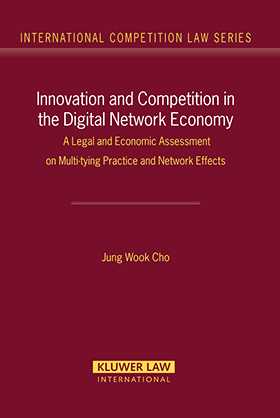
Through an in-depth analysis of the Korea Fair Trade Commission (KFTC) case—which led to a December 2005 decision, currently under appeal at the Seoul High Court, condemning three fundamental tying practices embedded in Microsoft’s global business strategy—the author clearly establishes the precise nature of Microsoft’s anticompetitive practices, complete with clear technical descriptions of the underlying applications and digital media systems. The discussion develops valuable guidelines on such core issues as the following:
• network effect, tipping effect, and lock-in effect
• separability of Microsoft’s tied and tying products
• forced purchase by consumers of multiple tied products
• Microsoft’s reinforcement of market entry barriers
• Microsoft’s “normal business practice” defense
• cumulative damage to consumers’ interests
The book’s ultimate legal and economic assessment clarifies ways in which government competition authorities can select from globally available options on a case-by-case basis, enforce re-pricing measures, avoid belated remedies, and continuously monitor new types of anticompetitive conduct.
Table of Contents. Abbreviations. Figures and Tables. 1. Introduction. 2. Backgrounds and Case Reference. I. New Digital Network Economy: Digital Media System and Instant Messaging System. II. Global Case References. 3. Korea Microsoft Case: Multiple Tyings in the Digital Media System and Instant Messaging System. I. Korean Legal System: the Monopoly Regulation and Fair Trade Act on Tying Practices. II. Factual Background of the Korea Microsoft Case. III. KFTC Decision (2005). IV . Appeal of the KFTC Decision to the KFTC. V. Appeal of the KFTC Decision to the Court. 4. An Assessment on the Multi-tying Practice. I. Purposes and Methods of Legal and Economic Assessment on the Korea Microsoft Case. II. Microeconomic Assessment. III. Macroeconomic Assessment. IV. Assessment on Efficiencies of Multi-tying Practice. V. Assessment on Corrective Remedies. VI. Transjudicial Availability of the Assessment on Microsoft’s Multi-tying Practice. 5. Conclusion. Appendices. References. Glossary. Index.
Call sales at 1-800-638-8437