Product Line | Kluwer Law International |
|---|---|
ISBN-13 | 9789403570709 |
Availability | Ships in 3-5 Business Days |
Last Updated | 2026-06-23 |
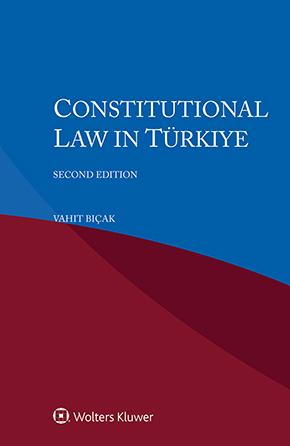
Derived from the renowned multi-volume International Encyclopaedia of Laws, this very useful analysis of constitutional law in Turkey provides essential information on the country’s sources of constitutional law, its form of government, and its administrative structure. Lawyers who handle transnational matters will appreciate the clarifications of particular terminology and its application. Throughout the book, the treatment emphasizes the specific points at which constitutional law affects the interpretation of legal rules and procedure.
Thorough coverage by a local expert fully describes the political system, the historical background, the role of treaties, legislation, jurisprudence, and administrative regulations. The discussion of the form and structure of government outlines its legal status, the jurisdiction and workings of the central state organs, the subdivisions of the state, its decentralized authorities, and concepts of citizenship. Special issues include the legal position of aliens, foreign relations, taxing and spending powers, emergency laws, the power of the military, and the constitutional relationship between church and state. Details are presented in such a way that readers who are unfamiliar with specific terms and concepts in varying contexts will fully grasp their meaning and significance.
Its succinct yet scholarly nature, as well as the practical quality of the information it provides, make this book a valuable time-saving tool for both practising and academic jurists. Lawyers representing parties with interests in Turkey will welcome this guide, and academics and researchers will appreciate its value in the study of comparative constitutional law.
The Author
List of Abbreviations
General Introduction
Part I. Sources of Constitutional Law
Chapter 1. Treaties
Chapter 2. The Constitution
Chapter 3. Legislation (Kanunlar)
Chapter 4. Case Law
Chapter 5. General Principles of Law
Chapter 6. Administrative Regulations and Orders
Chapter 7. Codification, Interpretation and Publicat
Part II. Form of Government
Chapter 1. General
Chapter 2. Head of State
Chapter 3. The Legislature
Chapter 4. The Executiv
Chapter 5. The Judiciary
Chapter 6. Independent Advisory or Supervisory Bodies at the Legislative and Executive Levels
Part III. The State and Its Administrative Structure
Chapter 1. The Structure of the State: A Unitary System with Decentralized Administration
Chapter 2. The Administrative Subdivisions of Türkiye
Chapter 3. The Powers and Functions of Local Governments
Chapter 4. Coordination Between Central and Local Governments
Chapter 5. Special Administrative Status and Regional Governance
Chapter 6. Decentralization in Türkiye: Historical Evolution and Contemporary Significance
Chapter 7. Implementation of Decentralized Governance in Practice
Chapter 8. Comparative Perspectives on Decentralization and Their Relevance to the Turkish Constitutional Order
Chapter 9. Reforming Türkiye’s Decentralization Model
Chapter 10. The Future of Decentralized Governance in Türkiye
Part IV. Citizenship and the Administration of Justice
Chapter 1. Turkish Citizenship
Chapter 2. Fundamental Rights and Liberties
Chapter 3. Rights and Status of Foreigners in Türkiye
Part V. Specific Issues
Chapter 1. Emergency Powers, War, and Constitutional Limitations
Chapter 2. Counterterrorism and National Security
Chapter 3. Taxing and Spending Power
Chapter 4. Data Protection and Privacy Rights
Chapter 5. Environmental Rights and Constitutional Protection
Chapter 6. Türkiye’s International Human Rights Obligations
Chapter 7. The Constitutional Relationship Between Religion and State
Chapter 8. Constitutional Amendments and Reform Efforts
Conclusion: The Evolution and Future of Turkish Constitutionalism
Selected Bibliography
Index
 NEED HELP FINDING THE RIGHT SOLUTION?
Call sales at 1-800-638-8437
HAVE A QUESTION?


These cookies are necessary for the website to function. They are usually set in response to actions made by you which amount to a request for services, such as setting your privacy preferences, logging in or filling in forms. You can set your browser to block or alert you about these cookies, this may have an effect on the proper functioning of (parts of) the site.
These cookies enable the website to provide enhanced functionality, user experience and personalization, and may be set by us or by third party providers whose services we have added to our pages. If you do not allow these cookies, then some or all of these services may not function properly.
These cookies support analytic services that measure and improve the performance of our site. They help us know which pages are the most and least popular and see how visitors move around the site.
These cookies may collect insights to issue personalized content and advertising on our own and other websites, and may be set through our site by third party providers. If you do not allow these cookies, you may still see basic advertising on your browser that is generic and not based on your interests.
