
Loading
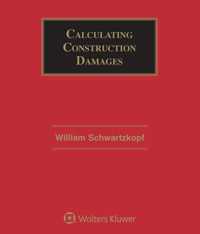
Calculating Construction Damages, Fourth Edition

Calculating Construction Damages, Fourth Edition

SKU:10073258
William Schwartzkopf
Internet price is for a three-month subscription. Once you complete your purchase, VitalLaw registration instructions and login credentials to access your subscription will be emailed to you within one business day.
Price:
$779.00
Product Line
Wolters Kluwer Legal & Regulatory U.S.
Product SKU
10073258

Overview

Calculating construction damages can be complex and confusing. Written by a recognized expert in the area of construction claims, Calculating Construction Damages is a one-of-a-kind resource providing step-by-step guidelines for valuing a claim and calculating damages.


Only Calculating Construction Damages leads you through every step you need to take in order to reach an accurate assessment of construction damages. Complete coverage includes:

  • General Principles of Damage Calculation
  • Labor Costs
  • Equipment and Small Tool Costs; Additional Equipment Costs
  • Material Costs
  • Bond and Insurance Costs
  • Home Office Overhead

Calculating Construction Damages is organized by type of damage rather than type of claim. Its clear, mathematical techniques will enable you to value any claim and accurately calculate damages.


Note: Online subscriptions are for three-month periods.

Table Of Contents

Preface

About the Author

Chapter 1  GENERAL PRINCIPLES OF DAMAGE CALCULATION

  • Introduction
  • Preliminary Damage Analysis
  • General Methods of Damage Calculation
  • Quantum Meruit
  • Jury Verdict Method
  • Economic Loss Rule
  • Linking Causation and Damages

Chapter 2  LABOR COSTS

  • 2.01 Introduction
  • 2.02 Direct Labor Overrun
  • 2.03 Labor Burdens
  • 2.04 Sample Direct Labor Overrun Calculation
  • 2.05 Calculation of Wage Escalation
  • 2.06 Loss of Productivity
  • 2.07 Learning and Experience Curves
  • 2.08 Effect of Changes on Labor Productivity
  • 2.09 Calculating Productivity Loss


Chapter 3  EQUIPMENT AND SMALL TOOL COSTS; ADDITIONAL EQUIPMENT COSTS

  • 3.01 Introduction
  • 3.02 Additional Equipment Usage
  • 3.03 Cost of Equipment
  • 3.04 Industry Guides
  • 3.05 When Rates Are Inapplicable
  • 3.06 Cost of Additional Small Tools


Chapter 4 MATERIAL COSTS

  • 4.01 Introduction
  • 4.02 Materials Defined
  • 4.03 Reasons for Material Claims
  • 4.04 Other Costs Associated with Material Claims
  • 4.05 Calculating Additional Material Quantities
  • 4.06 Calculating Additional Costs
  • 4.07 Mitigating Factors in Recovering Additional Costs
  • 4.08 Credit for Deleted Materials
  • 4.09 Price Escalation or Revision Clauses


Chapter 5 BOND AND INSURANCE COSTS

  • 5.01 Introduction
  • 5.02 Construction Contract Bonds
  • 5.03 Bonds on Public Projects
  • 5.04 Bonds on Private Projects
  • 5.05 Reasons for Increased Bond Costs
  • 5.06 Calculating Costs of Increased Bond Premiums
  • 5.07 Subcontractor Default Insurance
  • 5.08 Loss of Bonding Capacity
  • 5.09 Increased Insurance Costs


Chapter 6  JOBSITE OVERHEAD

  • 6.01 Introduction
  • 6.02 Jobsite Overhead Defined
  • 6.03 Calculation Methods


Chapter 7  HOME OFFICE OVERHEAD

  • 7.01 Introduction
  • 7.02 Home Office Overhead Costs Defined
  • 7.03 Fixed Costs Versus Variable Costs
  • 7.04 Eichleay Corp.: A Simple Approach to Calculating Home Office Overhead
  • 7.05 Extended and Unabsorbed Overhead Costs Distinguished
  • 7.06 Establishing a Prima Facie Case for Recovery of Home Office Overhead
  • 7.07 Calculating Home Office Overhead in State and Private Contracts
  • 7.08 Calculating Home Office Overhead Costs in Cases of Extended Contract Performance
  • 7.09 Calculating Home Office Overhead Costs Incurred After Date of Substantial Completion
  • 7.10 Reserving the Right to Claim for Home Office Overhead
  • 7.11 Subcontractor Pass-Through Claims and the Eichleay Formula
  • 7.12 Secondary Considerations in Calculating Home Office Overhead
  • 7.13 Other Methods of Calculating Home Office Overhead
  • 7.14 Comparative Calculation of Home Office Overhead


Chapter 8 PROFIT

  • 8.01 Introduction
  • 8.02 Profit Defined
  • 8.03 Profit on Work Performed
  • 8.04 Determining Profit Percentages on Work Performed
  • 8.05 Profit on Work Performed Prior to Termination
  • 8.06 Profit on Unperformed Work
  • 8.07 Profit on Contracts Not Awarded
  • 8.08 Measuring Profit on Unperformed Work
  • 8.09 Lost Business Revenues
  • 8.10 Contractual Barriers to Recovery of Lost Profits
  • 8.11 Punitive Damages
  • 8.12 Profit on Deductive Changes (Backcharges)


Chapter 9 INTEREST

  • 9.01 Introduction
  • 9.02 Prejudgment Interest in Federal Contracts
  • 9.03 Federal Jurisdiction Interest Statute
  • 9.04 Prompt Payment Act
  • 9.05 Prejudgment Interest Under State Law
  • 9.06 Postjudgment Interest
  • 9.07 Interest on Borrowed Funds
  • 9.08 Imputed Interest
  • 9.09 Interest on Retainage
  • 9.10 Interest on Extra Work


Chapter 10  ATTORNEYS’ FEES AND CLAIM PREPARATION COSTS

  • 10.01 Introduction
  • 10.02 Contractual Provisions
  • 10.03 Equal Access to Justice Act
  • 10.04 Attorneys' Fees on Miller Act Claims
  • 10.05 Bad Faith Exception
  • 10.06 Fraud, False Claims, and Bad Actions Exceptions
  • 10.07 Recoverability of Costs of Preparing Requests for Equitable Adjustments
  • 10.08 Reasonableness of Attorneys' Fees and Costs


Chapter 11 UNIT-PRICE CONTRACTS

  • 11.01 Introduction
  • 11.02 Unit-Price Contracts Generally
  • 11.03 Quantity Changes When the Contract Does Not Have a Variation in Quantities Clause
  • 11.04 Variation in Quantities Clauses
  • 11.05 Unbalanced Bids
  • 11.06 Breach or Termination


Chapter 12 PRESENTATION OF DAMAGES

  • 12.01 Introduction
  • 12.02 Summary of Damages
  • 12.03 Use of Graphs
  • 12.04 Expert Analysis


Chapter 13 CLAIMS BY OWNERS

  • 13.01 Introduction
  • 13.02 Failure to Complete
  • 13.03 Cost of Correcting Nonconforming Work
  • 13.04 Cost of Delay
  • 13.05 Lost Profits
  • 13.06 Owner's Claims Against Design Professionals
  • 13.07 Reductions in Scope Through Deductive Changes


Chapter 14 LIQUIDATED DAMAGES

  • 14.01 Introduction
  • 14.02 Purpose of Liquidated Damages
  • 14.03 Developing an Enforceable Clause
  • 14.04 Implementation of the Clause
  • 14.05 Calculating Liquidated Damages
  • Appendix A Sample Claim
  • Appendix B Examples of Different Types of Damage Calculations
  • Table of Articles
  • Table of Cases
  • Index

Experts

  • William Schwartzkopf
    William Schwartzkopf
    Sage Consulting Group
    President
    William Schwartzkopf heads the schedule, damages and labor productivity practice at Sage Consulting Group, a consulting firm based in Denver, Colorado,
Loading
Calculating Construction Damages, Fourth Edition | Wolters Kluwer Legal & Regulatory