Loading
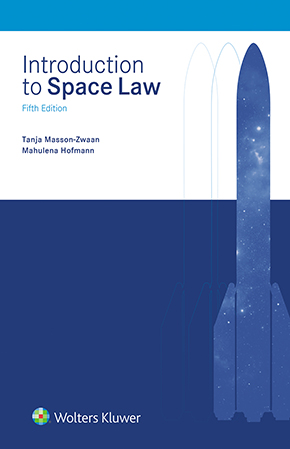
Introduction to Space Law, Fifth Edition

Introduction to Space Law, Fifth Edition

SKU:10057285-0004
Tanja Masson-Zwaan, Mahulena Hofmann
For general delivery times, please see our shipping policy
Price:
$124.00
Product Line
Kluwer Law International
ISBN-13
9789403546568
Availability
Ships in 5-7 Business Days
Last Updated
2024-12-17

Overview

Introduction to Space Law, currently in its fifth edition, comprises major updates to the fourth edition of the long-time classic, reflecting new developments in space law and technology over the past five years. The relevance and substance of space law as a branch of public international law continue to expand. This updated version covers new or expanded material on the proliferation of non-state and commercial entities as space actors, legal aspects of innovations in space technology, the evolving international law of satellite telecommunication in a networked world, and the adoption of national laws and international soft law mechanisms that complement the international treaty regime adopted in the 1960s and 1970s.


What’s in this book:

In this latest overview of space law, the authors provide an easily accessible analysis of the governing framework and institutional landscape at the international, regional (with a focus on Europe) and national levels and the legal challenges of new and traditional areas of space activity, including: 

  • the peaceful uses of outer space, including issues of dual-use, export control and cybersecurity;
  • protection of the Earth and space environment;
  • telecommunication;
  • the commercial use of space resources;
  • human space flight;
  • small satellites and large constellations;
  • Earth observation; and
  • global navigation satellite systems.

Furthermore, the five United Nations Treaties on space are included as Annexes for easy reference by students and professionals alike.


How this will help you:

This thoroughly updated Introduction to Space Law furnishes a clear overview of the legal aspects of a wide array of current and emerging space activities. Lawyers, policy-makers, diplomats, students, and professionals in the telecommunication and aerospace sectors, with or without a legal background, will find concise yet comprehensive guidance in this book that will help them understand and address legal issues in the ever-expanding field of space activities.


Authors:

Tanja Masson-Zwaan & Mahulena Hofmann

Table Of Contents

Preface


List of Abbreviations


CHAPTER 1

Introduction


CHAPTER 2

The Space Law Treaties


CHAPTER 3

Other Sources of Space Law


CHAPTER 4

Europe in Space


CHAPTER 5

Peaceful Uses of Outer Space


CHAPTER 6

Human Space Flight


CHAPTER 7

Space Resources Activities


CHAPTER 8

Space Debris and the Long-Term Sustainability of Space Activities


CHAPTER 9

Planetary Protection


CHAPTER 10

Space Communication


CHAPTER 11

Small Satellites and Large Constellations


CHAPTER 12

Global Navigation Satellite Systems


CHAPTER 13

Remote Sensing


Annexes


ANNEX 1

Treaty on Principles Governing the Activities of States in the Exploration and Use of Outer Space, Including the Moon and Other Celestial Bodies (1967)


ANNEX 2

Agreement on the Rescue of Astronauts, the Return of Astronauts and the Return of Objects Launched into Outer Space (1968)


ANNEX 3

Convention on International Liability for Damage Caused by Space Objects (1972)


ANNEX 4

Convention on Registration of Objects Launched into Outer Space (1975)


ANNEX 5

Agreement Governing the Activities of States on the Moon and Other Celestial Bodies (1979)


Selected Bibliography


Index

Testimonial

It begins with an excellent overview of space law as a concept and a branch of international law and continues with an exposition of the five United Nations treaties on outer space, which are included in full as an appendix. It is, however, following discussions of other sources of space law and a focus on the European angle, that the book gets onto the arguably more interesting practical aspects. These include the issues surrounding space militarisation, situational awareness and cybersecurity; human spaceflight; the divisive topic of space resources (commercial mining vs. the ‘province of all mankind’ principle); and a number of other space applications. Importantly, there are also chapters on space debris and long-term sustainability, and on planetary protection, although they provide only an overview of these topics.


Does this book penetrate the veil of obscurity surrounding space law? In a word, yes; the text is certainly ‘accessible’ to an intelligent reader, while providing for serious space law students the plethora of footnote references so beloved by lawyers. As one would expect, there is also a bibliography and an index.—By Mark Williamson, Space Technology Consultant, Chester, UK- ROOM Space Journal


It must be highlighted at the outset that this new edition is of considerable value for everyone interested in the regulation of the exploration and use of outer space, whether being student, researcher, or practitioner in the fields of space science, technology, engineering, law, or policy.


It definitely provides an impressive orientation of the most topical developments in this field, and in this vein brings clarity to many actions at the intergovernmental level with contemporary and future impacts on the application and implementation of the legal frameworks governing outer space activities.


As a practitioner myself, I appreciate particularly the book´s presentation of the interconnection between international governance processes, including decision-making in intergovernmental bodies, and corresponding actions at the national level, of highly topical issues and concerns in the security, safety, and sustainability of outer space activities.


In conclusion, and as stated upfront, the book Introduction to Space Law offers an excellent orientation of the highly dynamic field of space activities and their regulatory impact, and with its wealth of sources and comments in footnotes, including recent documentation of intergovernmental bodies, websites, and links to activities of public and private actors, is very well-suited as a companion for those engaged in modern space activities, from students to professionals and anyone interested in space affairs.—Niklas Hedman, General Counsel Committee on Space Research (COSPAR) - Air and Space Law 3/2025 
Experts

  • Tanja Masson-Zwaan
    Tanja Masson-Zwaan
    International Institute of Air and Space Law at Leiden University
    Assistant Professor and Deputy Director
    Dr Tanja Masson-Zwaan is Assistant Professor and Deputy Director of the International Institute of Air and Space Law at Leiden University. Learn more.
  • Mahulena Hofmann
    Mahulena Hofmann
    University of Luxembourg
    Full professor of the SES Chair in Satellite Communication and Media Law
    Mahulena Hofmann is professor of Space and Telecommunication Law at the University of Luxembourg. Learn more.
Loading
Introduction to Space Law, Fifth Edition | Wolters Kluwer Legal & Regulatory