Product Line | Kluwer Law International |
|---|---|
Product SKU | 10087292-0001 |
ISBN-13 | 9789403529103 |
Availability | Ships in 5-7 Business Days |
Last Updated | 2024-02-2 |
About this book:
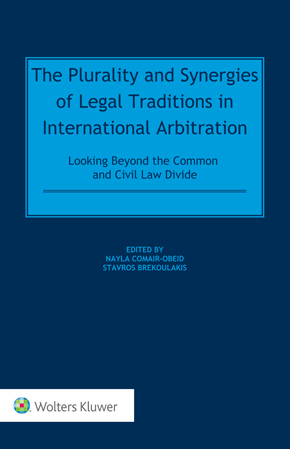
The Plurality and Synergies of Legal Traditions in International Arbitration is a unique book furnishing an informative and rational discussion on various facets of international arbitration, clarifying the main procedural and substantive similarities and differences between different legal systems around the world, highlighting not only common and civil law traditions but also the role played by regional legal traditions including Islamic law and African perspectives. The cultural diversity characterizing international arbitration today is as much a source of enrichment as it is sometimes a source of practical difficulties affecting both the arbitration procedure and the application of substantive law. Consequently, it is becoming more apparent that the critical project for international arbitration in the immediate future will be how to answer the fundamental question of cultural pluralism best.
What’s in this book:
This book comprises contributions from fifty arbitrators, counsel, and academics representing every region of the world where international arbitration has secured a foothold; the volume consolidates and synthesizes a series of discussions sponsored by the Chartered Institute of Arbitrators that took place in Dubai, Johannesburg, and Paris in 2017. The chapters identify and address the following cultural distinctions that affect the vital ever-present factors that have forged the character of modern international arbitration:
The book is brimming with tools and recommendations to ensure synergy and harmony between the different legal traditions that coexist in today’s arbitral proceedings.
How this will help you:
All users of arbitration, whether the arbitrators themselves, lawyers involved as counsel for parties, or judges applying arbitration law, will welcome this peerless elucidation of the different systems and alternative ways of presenting the divergent procedures and methods of conducting international arbitrations. It goes without saying that this book will prove to be of immense value to arbitration academics.
Editors and Contributors
List of Abbreviations
Foreword
CHAPTER 1
Introduction
Nayla Comair-Obeid & Stavros Brekoulakis
PART I
Arbitration Clauses and Constitution of the Arbitral Tribunals: The Influence of Different Legal Traditions
CHAPTER 2
Essential Elements in Drafting Arbitration Clauses: Is the Common/Civil Law Divide Relevant?
Pierrick Le Goff
CHAPTER 3
Transcending the Common/Civil Law Divide: The Role of the Modern International Arbitrator
Sami Tannous
CHAPTER 4
Arbitration in Africa: What the Client Wants – Strategic Choices for an Efficient and Cost-Effective Arbitration Procedure
Michael Patchett-Joyce
CHAPTER 5
Constituting the Arbitral Tribunal: Understanding the Nuance of Legal Tradition in an African Context
Adewale Adedamola Olawoyin, SAN
PART II
Civil Law and Common Law Approaches in the Arbitration Process
CHAPTER 6
Some Observations on the Civil Law: Common Law Dichotomy: The Approach to Procedural and Legal Issues
Reza Mohtashami KC
CHAPTER 7
The PCA Rules and the UNCITRAL Arbitration Rules: Accommodating the Differences Between Civil and Common Law
Túlio Di Giacomo Toledo & Ruba Ghandour
CHAPTER 8
The Synergy Between Common Law and Civil Law under UNCITRAL and CRCICA Rules
Ismail Selim
CHAPTER 9
Document Production in International Arbitration Revisited: From Civil and Common Law Dichotomy to Operational Synergies
Gordon Blanke
CHAPTER 10
Cross-Examination and Oral Advocacy
Michelle Nelson
CHAPTER 11
Witness Testimony and Cross-Examination in International Arbitration: A Civil Law and Common Law Blended Approach?
Samaa A.F. Haridi & Ilham A. Kabbouri
CHAPTER 12
Weighing the Evidence: Experts and Witnesses Versus Documentary Evidence
Philip Punwar & Dustin Appel
CHAPTER 13
The Art of Advocacy: The Common Law Perspective
Ann Ryan Robertson
CHAPTER 14
Common Law Advocacy in International Arbitrations: Fit for Purpose?
Derek Wood, CBE, KC
CHAPTER 15
Understanding the Cultural Challenges of Arbitrating in the Middle East
Joel E. Richardson & Don Jeon
CHAPTER 16
Driving in the Middle of the Road?: Written Pleadings and Other Procedural Matters – Africa as an Example of Common Law/Civil Law Divergence and Convergence
Duncan Bagshaw
CHAPTER 17
Civil-Common Law Divergence in Resolving Commercial Disputes by Arbitration: An African Perspective
Paul Obo Idornigie
CHAPTER 18
The Civil Law/Common Law Divide in International Arbitration: Requiem or New Dawn?
Andrea Carlevaris
PART III
Applicable Substantive Law Considerations and the Common Law/Civil Law Approaches
CHAPTER 19
Applicable Law and the Civil and Common Law Divide
George A. Bermann
CHAPTER 20
Ascertaining the Content of the Applicable Law in International Arbitration: Converging Civil and Common Law Approaches
Mohamed Abdel Wahab
PART IV
The Civil Law/Common Law Dichotomy in Investment Arbitration
CHAPTER 21
How Can Investment Treaty Arbitration Best Serve Its Goals?
David W. Rivkin & Natalie L. Reid
CHAPTER 22
Investment Arbitration Tribunals: Beyond the Civil-Common Law Dichotomy
Benoit Le Bars
CHAPTER 23
Reintroducing the Divergence Between Legal Traditions in International Investment Law: Substantive Aspects
Babatunde Fagbohunlu
CHAPTER 24
The Common Law/Civil Law Divide in Investment Arbitration: Special African Considerations
Marie-Camille Pitton
PART V
The Civil Law/Common Law Dichotomy in International Arbitration: A Focus On Specific Industries and Legal Areas
CHAPTER 25
Security, Piracy and Evidence: Securing Arbitration Proceedings in a Digital World
Michael Polkinghorne, Ellen Campbell & Nika Larkimo
CHAPTER 26
Rise of ADR for the Resolution of Telecommunications/New Technologies Disputes: Some International Compared Approaches
Beatrice Castellane
CHAPTER 27
Arbitration of Telecommunications and Other Public-Private Partnership Disputes: The Disappearing Common Law/Civil Law Dichotomy
Tom Alan Cunningham
CHAPTER 28
Divergence and Convergence in the Arbitration of IP Disputes
Thomas D. Halket
CHAPTER 29
Common Law and Civil Law Approaches to the Interpretation of Liquidated Damages under the FIDIC Forms of Contract
Nael G. Bunni
CHAPTER 30
Africa’s Extractive Industries and the Convergence of Common Law and Civil Law Systems
Mouhamed Kebe
PART VI
Lex Arbitri and the Role of National Judges: A Perspective from Different Jurisdictions
CHAPTER 31
The London Principles and Their Impact on Law Reform
Janet Walker, CM
CHAPTER 32
Judicial Intervention, Perception and Reaction: The Civil-Common Law Approaches
Michael Hwang & Vamika Puri
CHAPTER 33
Recognizing the Effects of an Arbitral Agreement and Interpreting its Scope: The Kenyan Perspective
Joyce Aluoch
CHAPTER 34
Setting-Aside Proceedings: Ten Questions to Ask and the Swiss Approach
Felix Dasser
CHAPTER 35
The Application of the Public Policy Exception with a Focus on Brazil, Russia, India and China
Anton G. Maurer
PART VII
The Immunity of International Arbitrators
CHAPTER 36
Immunity of Arbitrators
Teresa Giovannini
CHAPTER 37
Immunity of Arbitrators: The Common/Civil Law Divergence and Convergence with Particular Reference to African States
Adedoyin Rhodes-Vivour, SAN
PART VIII
Fees and Costs in International Arbitration
CHAPTER 38
Fees and Costs: Common and Civil Law Synergy and Divergence in International Arbitration
Laurence Shore & Federico Alberto Cabona
CHAPTER 39
Costs in International Arbitration: Synergy Between Civil and Common Law Principles
Emilia Onyema
PART IX
Cultural Considerations, Training and Opportunities for the Young Generation in International Arbitration
CHAPTER 40
International Arbitration: Training in Procedural Aspects That Differ in Civil and Common Law Approaches
Yvonne Foo
CHAPTER 41
Harmonization of Different Laws and Legal Traditions in International Arbitration: Opportunities for Young Practitioners
Fan Yang
CHAPTER 42
Opportunities for Younger Arbitrators of Any and All Legal Traditions
Saoirse O’Dea
Index
This book is a fascinating read and a significant piece of arbitration scholarship that tackles some of the most important variations in international arbitration practice across a broad spectrum of common and civil law jurisdictions. It follows that its readers will likely come away feeling slightly better informed with regard to the differing approaches taken towards the practice of international arbitration. Its insights will aid practitioners and academics in understanding, and perhaps even better appreciating, the various tools and procedures that are used in jurisdictions all over the world in tackling arbitration’s most critical issues.
As arbitration continues to develop globally, this book can act as a cultural bridge between practitioners of all ilks, which, given today’s increasingly polarised world, is surely a good thing. — Joel Evans, Arbitration Dispute Review April 2025
 NEED HELP FINDING THE RIGHT SOLUTION?
Call sales at 1-800-638-8437
HAVE A QUESTION?


These cookies are necessary for the website to function. They are usually set in response to actions made by you which amount to a request for services, such as setting your privacy preferences, logging in or filling in forms. You can set your browser to block or alert you about these cookies, this may have an effect on the proper functioning of (parts of) the site.
These cookies enable the website to provide enhanced functionality, user experience and personalization, and may be set by us or by third party providers whose services we have added to our pages. If you do not allow these cookies, then some or all of these services may not function properly.
These cookies support analytic services that measure and improve the performance of our site. They help us know which pages are the most and least popular and see how visitors move around the site.
These cookies may collect insights to issue personalized content and advertising on our own and other websites, and may be set through our site by third party providers. If you do not allow these cookies, you may still see basic advertising on your browser that is generic and not based on your interests.
