Product Line | Wolters Kluwer Legal & Regulatory U.S. |
|---|---|
ISBN-13 | 9781543884395 |
Availability | This product is available for pre-sale |
Publish Frequency | Annually |
Last Updated | 2026-11-12 |
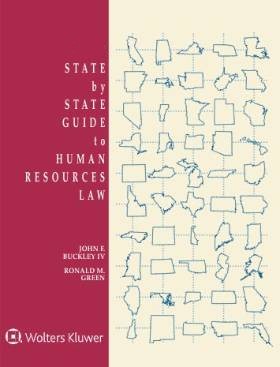
State-by-State Guide to Human Resources Law is the most comprehensive, authoritative guide to the employment laws of the 50 states and the District of Columbia. It is designed to provide quick access to each state's laws on the expanding number of issues and concerns facing business executives and their advisors—the professionals in HR, compensation, and employee benefits who work in multijurisdictional environments.
State-by-State Guide to Human Resources will help you to:
State Laws Included:
Alabama, Alaska, Arizona, Arkansas, California, Colorado, Connecticut, Delaware, Florida, Georgia, Hawaii, Idaho, Illinois, Indiana, Iowa, Kansas, Kentucky, Louisiana, Maine, Maryland, Massachusetts, Michigan, Minnesota, Mississippi, Missouri, Montana, Nebraska, Nevada, New Hampshire, New Jersey, New Mexico, New York, North Carolina, North Dakota, Ohio, Oklahoma, Oregon, Pennsylvania, Rhode Island, South Carolina, South Dakota, Tennessee, Texas, Utah, Vermont, Virginia, Washington, West Virginia, Wisconsin, Wyoming
Note: Online subscriptions are for three-month periods.
Previous Edition: State by State Guide to Human Resources Law, 2026 Edition, ISBN 9781543883190
Preface
Acknowledgments
Frequently Consulted Human Resources State Law Provisions
Chapter 1 Trends and Controversies in Human Resources Law
§ 1.01 Supreme Court, Ninth Circuit, Congress Address Arbitration Issues
§ 1.02 Employee Benefits After Dobbs
§ 1.03 New State Laws Affect Employer-Employee Communications
§ 1.04 Mississippi Enacts Equal Pay Law
§ 1.05 Additional States Enact Paid Sick Leave Legislation
§ 1.06 New Timeline for Implementation of Washington’s Long-Term Care Insurance Program
§ 1.07 Supreme Court Rebuffs Another Challenge to the Affordable Care Act
§ 1.08 White Collar Overtime Exemption Issues
§ 1.09 States Continue to Strengthen Equal Pay Acts
§ 1.10 Update on EEO-1 Data Collection and Analysis
§ 1.11 SECURE Act Provides Retirement Savings Incentives
§ 1.12 Tax Reform Legislation
§ 1.13 Update on Health Care Reform
§ 1.14 States Address Health Care Reform
§ 1.15 States Address Noncompetition Agreements and Low-Wage Workers
§ 1.16 California, New York Take Steps to Protect Immigrant Workers
§ 1.17 Supreme Court Decides Major Title VII Case
§ 1.18 Supreme Court Title VII Jurisprudence
§ 1.19 Domestic Workers’ Bill of Rights Enacted in Several States
§ 1.20 Proposed Thirty-Two-Hour Workweek Act
§ 1.21 Supreme Court Decides Important ADEA Cases
§ 1.22 DOL, IRS Agree with Several States to Address Employee/ Independent Contractor Misclassification
§ 1.23 Americans with Disabilities Act Amendments Act; Proposed Pregnant Workers Fairness Act
§ 1.24 Paid Family Leave—Recent Developments
§ 1.25 The American Workforce and the COVID-19 Pandemic—Rescue and Recovery
§ 1.26 FMLA Leave for Family of Injured Military Service Members and Veterans
§ 1.27 States Also Provide Family Military Leave
§ 1.28 States Adopt Measures Prohibiting Discrimination on the Basis of Sexual Orientation and Gender Identity
§ 1.29 Federal Equality Act; Amendment to E.O. 11,246
§ 1.30 Supreme Court Decisions on Same-Sex Marriage
§ 1.31 Genetic Information Nondiscrimination Act Generates Charge Filings
§ 1.32 Utah Wrongful Discharge—Public Policy Favoring Self-Defense Recognized
§ 1.33 Workplace Violence Prevention
§ 1.34 Joint Federal and State Employment Verification Initiatives
§ 1.35 Mental Health Parity Act Requirements Expanded by ACA
§ 1.36 Sexual Favoritism in the Workplace
§ 1.37 Reverse Age Discrimination
§ 1.38 State-Mandated or Authorized Background Checks
§ 1.39 Additional Protection for Whistleblowers Under the Sarbanes-Oxley Act
Chapter 2 Defining the Employment Relationship
§ 2.01 Various Forms of Employment Relationships
§ 2.02 Offer and Acceptance of Employment
§ 2.03 Oral Contracts for Employment
§ 2.04 Written Contracts
§ 2.05 Obligations Imposed by Operation of Law—Tort Liability
§ 2.06 Dissolution of the Employment Relationship
Chapter 3 Fair Employment Practices
§ 3.01 Overview: Increasing Importance of State Fair Employment Practice Laws
§ 3.02 Current Issues in Fair Employment Practice Laws
§ 3.03 Protected Classifications, Compliance, Prohibitions, and Exceptions
§ 3.04 Disposition of Fair Employment Practice Violations
§ 3.05 Affirmative Action
§ 3.06 The Role of Federal Guidelines and Precedent in State Fair Employment Practice Enforcement
Chapter 4 Wages, Hours, and Holidays
§ 4.01 Overview: The Fair Labor Standards Act and State Regulation of Employment
§ 4.02 Ongoing Compensation Requirements and Penalties
§ 4.03 Minimum Wage Requirements and Exemptions
§ 4.04 Overtime Compensation Requirements and Exemptions
§ 4.05 Penalties for Violating Minimum Wage Laws and Overtime Provisions
§ 4.06 State Laws on Employment of Minors
§ 4.07 Employers’ Recordkeeping Requirements for Adult Employees and Minors
§ 4.08 Penalties for Violating Recordkeeping Requirements
§ 4.09 State Holidays
§ 4.10 Meal and Rest Period Requirements
Chapter 5 Employment at Will
§ 5.01 Overview: Erosion of Traditional Employment-at-Will Doctrine
§ 5.02 Causes of Action for Wrongful Discharge Based on Implied Contracts
§ 5.03 Causes of Action for Wrongful Discharge Based on Tort Theories
§ 5.04 Causes of Action for Wrongful Discharge Based on Public Policy Violations
§ 5.05 Statutory Restrictions on Discharging Employees
§ 5.06 Remedies and Defenses in Wrongful Discharge Lawsuits
§ 5.07 State Right-to-Work and Other Labor Laws
Chapter 6 Benefits
§ 6.01 Overview: ERISA and State Regulation of Benefits
§ 6.02 Coverage Requirements for Group Health Insurance Plans
§ 6.03 Health Benefits Continuation and Conversion
§ 6.04 State Regulation of Health Maintenance Organizations
§ 6.05 State Administrative Requirements for Health Insurance
§ 6.06 Group Life Insurance
§ 6.07 Severance and Other Benefits Due on Termination
§ 6.08 Family and Medical Leave Laws
§ 6.09 Legal Expenses Insurance
§ 6.10 Dental Insurance
Chapter 7 Unemployment Compensation
§ 7.01 Overview: Federal-State Collaboration in Administering and Funding Unemployment Compensation
§ 7.02 Employers Subject to State Unemployment Compensation Laws
§ 7.03 Unemployment Disqualifications and Exemptions
§ 7.04 Benefits Eligibility Criteria and Payouts
§ 7.05 Employer Contributions and Recordkeeping Requirements
Chapter 8 Workplace Privacy
§ 8.01 Overview: Expansion of Privacy Rights in the Workplace
§ 8.02 Regulation of Workplace Testing
§ 8.03 Use of Arrest and Conviction Records in Hiring Decisions
§ 8.04 Use of Consumer Credit Reports
§ 8.05 Blacklisting, References, and Personnel Records
§ 8.06 Employee Privacy Rights in Work Space, Workplace Telephone and Computer Systems and Electronic Mail
§ 8.07 Federal, State Legislation Banning Employer Requests for Social Media Information
§ 8.08 Employment Decisions Based on Off-Duty Conduct
§ 8.09 Policy Guidance for Workplace Privacy Issues
Chapter 9 Summary of Federal Legislation, Guidelines, and Policies on Human Resources Law
§ 9.01 Overview: Federal Law and Regulation of Human Resources Management
§ 9.02 Fair Employment Practices
§ 9.03 The Fair Labor Standards Act of 1938
§ 9.04 Benefits
§ 9.05 Privacy
§ 9.06 The Occupational Safety and Health Act
§ 9.07 Labor Relations
§ 9.08 The Immigration Reform and Control Act
§ 9.09 The Worker Adjustment and Retraining Notification Act
§ 9.10 Whistleblower Laws
Glossary
Index
 NEED HELP FINDING THE RIGHT SOLUTION?
Call sales at 1-800-638-8437
HAVE A QUESTION?


These cookies are necessary for the website to function. They are usually set in response to actions made by you which amount to a request for services, such as setting your privacy preferences, logging in or filling in forms. You can set your browser to block or alert you about these cookies, this may have an effect on the proper functioning of (parts of) the site.
These cookies enable the website to provide enhanced functionality, user experience and personalization, and may be set by us or by third party providers whose services we have added to our pages. If you do not allow these cookies, then some or all of these services may not function properly.
These cookies support analytic services that measure and improve the performance of our site. They help us know which pages are the most and least popular and see how visitors move around the site.
These cookies may collect insights to issue personalized content and advertising on our own and other websites, and may be set through our site by third party providers. If you do not allow these cookies, you may still see basic advertising on your browser that is generic and not based on your interests.
