Product Line | Kluwer Law International |
|---|---|
ISBN-13 | 9789403517568 |
Availability | Ships in 5-7 Business Days |
Last Updated | 2022-10-18 |
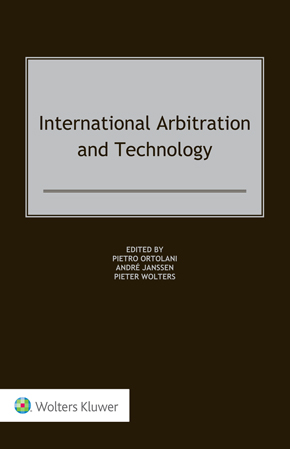
Digitalization is increasingly impacting the practice of international arbitration. Especially in the wake of COVID-19, technological solutions are adopted by counsel, tribunals, and arbitral institutions. This trend is likely to continue in the future, thus changing the way in which international arbitration is practiced. International arbitration and technology offers the first up-to-date and comprehensive overview of the interplay between technology and international arbitration, with a specific focus on the technological developments which are currently available and already practically relevant.
The authors’ practical perspectives on the impact of technology on arbitration yield valuable insights for arbitrators, tribunal secretaries, international arbitration counsel, and arbitral institutions. As many aspects of their work are already impacted by technology, they will find much value within this book’s pages. Furthermore, the book is of interest for academics working in the fields of international dispute resolution, and law and technology.
Preface
Chapter 1 Introduction: international arbitration and technology
Pietro Ortolani, André Janssen & Pieter Wolters
PART I. ONLINE ARBITRATION: NEEDS, CHALLENGES AND EXPECTATIONS OF DIFFERENT STAKEHOLDERS
Chapter 2 Online arbitration: the perspective of the arbitrator and the secretary
Noam Zamir
Chapter 3 Online arbitration: the counsel perspective
Niek Peters & Christina Mangani
Chapter 4 Online arbitration: the institutional perspective
Thomas de Bekker & Camilla Perera-De Wit
PART II. COMMENCING AND CONDUCTING ARBITRAL PROCEEDINGS: THE ROLE OF TECHNOLOGY
Chapter 5 Electronic consent to arbitration
Luigi Cantisani & Aygun Mammadzada
Chapter 6 The effects of online examination of experts and witnesses in international arbitration: familiar or uncharted territory?
Bas van Zelst & Bas Keizers
Chapter 7 Data protection and international arbitration: never the twain shall meet?
Emily Hay
PART III. THE DIGITAL ARBITRAL AWARD, ITS USES AS DATA, ITS VALIDITY AND ENFORCEABILITY
Chapter 8 Data mining, text analytics, and investor-state arbitration
Wolfgang Alschner & Damien Charlotin
Chapter 9 Data mining, text analytics and international commercial arbitration
Piotr Wilinski & Maciej Durbas
Chapter 10 The digital arbitral award
Pietro Ortolani
PART IV. FUTURE USE-CASES OF TECHNOLOGY IN ARBITRATION
Chapter 11 Technology and the processing of mass investment arbitration claims
Relja Radovic
Chapter 12 Blockchain technology and arbitration
Pietro Ortolani
In this well researched book, the authors seek to provide an up-to-date overview of the relationship between digital technologies and international arbitration. In doing that, they distinguish the current state of play of technology from speculation about what innovations may in fact come to fruition in the future. As practitioners in different roles (counsel, arbitral institutions, arbitrators, tribunal secretaries) and academics, the authors of ‘International Arbitration and Technology’ bring their own perspectives to the multiple issues at the intersection of arbitration and technology. They answer fundamental questions arising out of some of the technological developments that most impacted international arbitration practices. These questions include whether existing arbitration rules need to be revisited to cater to these changes and what tribunals should consider when deciding whether to adopt new technological tools or practices. The book provides an incredibly useful resource for practitioners interested in the digitalisation of arbitral proceedings. The authors explore the theme from a broad variety of angles and examine legal implications arising from the use of technology in arbitral proceedings.
Claire Morel de Westgaver – ICC Bulletin 2023 - 1
 NEED HELP FINDING THE RIGHT SOLUTION?
Call sales at 1-800-638-8437
HAVE A QUESTION?


These cookies are necessary for the website to function. They are usually set in response to actions made by you which amount to a request for services, such as setting your privacy preferences, logging in or filling in forms. You can set your browser to block or alert you about these cookies, this may have an effect on the proper functioning of (parts of) the site.
These cookies enable the website to provide enhanced functionality, user experience and personalization, and may be set by us or by third party providers whose services we have added to our pages. If you do not allow these cookies, then some or all of these services may not function properly.
These cookies support analytic services that measure and improve the performance of our site. They help us know which pages are the most and least popular and see how visitors move around the site.
These cookies may collect insights to issue personalized content and advertising on our own and other websites, and may be set through our site by third party providers. If you do not allow these cookies, you may still see basic advertising on your browser that is generic and not based on your interests.
