.png)
These cookies are necessary for the website to function. They are usually set in response to actions made by you which amount to a request for services, such as setting your privacy preferences, logging in or filling in forms. You can set your browser to block or alert you about these cookies, this may have an effect on the proper functioning of (parts of) the site.
These cookies enable the website to provide enhanced functionality, user experience and personalization, and may be set by us or by third party providers whose services we have added to our pages. If you do not allow these cookies, then some or all of these services may not function properly.
These cookies support analytic services that measure and improve the performance of our site. They help us know which pages are the most and least popular and see how visitors move around the site.
These cookies may collect insights to issue personalized content and advertising on our own and other websites, and may be set through our site by third party providers. If you do not allow these cookies, you may still see basic advertising on your browser that is generic and not based on your interests.

Product Line | Kluwer Law International |
|---|---|
Product SKU | 10057920-0001 |
ISBN-13 | 9789041124920 |
Availability | Ships in 3-5 Business Days |
Last Updated | 2008-04-14 |
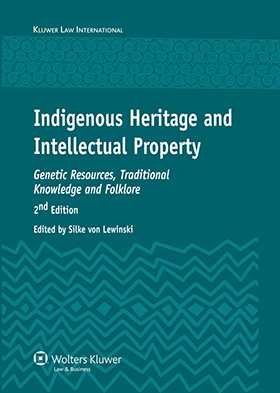
For indigenous cultures, property is an alien concept. Yet the market-driven industries of the developed world do not hesitate to exploit indigenous raw materials, from melodies to plants, using intellectual property law to justify their behaviour. Existing intellectual property law, for the most part, allows industries to use indigenous knowledge and resources without asking for consent and without sharing the benefits of such exploitation with the indigenous people themselves. It should surprise nobody that indigenous people object.
Recognizing that the commercial exploitation of indigenous knowledge and resources takes place in the midst of a genuine and significant clash of cultures, the eight contributors to this important book explore ways in which intellectual property law can expand to accommodate the interests of indigenous people to their traditional knowledge, genetic resources, indigenous names and designations, and folklore. In so doing they touch upon such fundamental issues and concepts as the following:
As a starting point toward mutual understanding and a common basis for communication between Western-style industries and indigenous communities, Indigenous Heritage and Intellectual Property is of immeasurable value. It offers not only an in-depth evaluation of the current legal situation under national, regional and international law including analyses of the Convention on Biological Diversity and other international instruments, as well as initiatives of the World Intellectual Property Organization (WIPO), the UN Food and Agriculture Organization (FAO), and other international bodies but also probes numerous further possibilities. While no one concerned with indigenous culture or environmental issues can afford to ignore it, this book is also of special significance to practitioners and policymakers in intellectual property law in relation to indigenous heritage.
This book, here in its second edition, presents the most recent state of knowledge in the field.
Call sales at 1-800-638-8437