Product Line | Kluwer Law International |
|---|---|
ISBN-13 | 9789403533865 |
Availability | Ships in 3-5 Business Days |
Last Updated | 2023-03-21 |
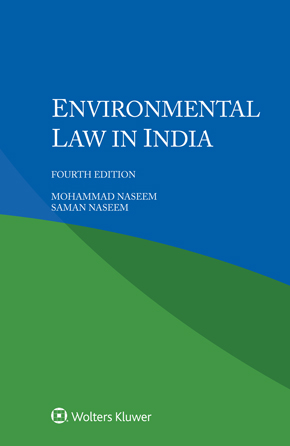
Derived from the renowned multi-volume International Encyclopaedia of Laws, this book provides ready access to legislation and practice concerning the environment in India. A general introduction covers geographic considerations, political, social and cultural aspects of environmental study, the sources and principles of environmental law, environmental legislation, and the role of public authorities.
The main body of the book deals first with laws aimed directly at protecting the environment from pollution in specific areas such as air, water, waste, soil, noise, and radiation. Then, a section on nature and conservation management covers protection of natural and cultural resources such as monuments, landscapes, parks and reserves, wildlife, agriculture, forests, fish, subsoil, and minerals. Further treatment includes the application of zoning and land-use planning, rules on liability, and administrative and judicial remedies to environmental issues. There is also an analysis of the impact of international and regional legislation and treaties on environmental regulation.
Its succinct yet scholarly nature, as well as the practical quality of the information it provides, make this book a valuable resource for environmental lawyers handling cases affecting India. Academics and researchers, as well as business investors and the various international organizations in the field, will welcome this very useful guide, and will appreciate its value in the study of comparative environmental law and policy.
The Author
Coauthor
List of Abbreviations
Preface
Acknowledgements
General Introduction
Chapter 1. General Background
Chapter 2. Basic Principles of Environmental Law
Chapter 3. Historical Background
Chapter 4. The Role of Government Institutions in the Shaping and Administration of Environmental Law and Policy
Chapter 5. Sources of Environmental Law
Part I. Pollution Control
Chapter 1. Introduction
Chapter 2. General Law
Chapter 3. Air Pollution
Chapter 4. Water Pollution
Chapter 5. Waste
Chapter 6. Soil Pollution
Chapter 7. Noise Pollution
Chapter 8. Radiation and Vibrations (Nuclear and Non-nuclear)
Chapter 9. Other Sectors
Part II. Nature Conservation and Management
Chapter 1. Introduction
Chapter 2. Monuments and Landscapes
Chapter 3. Protected Areas
Chapter 4. Protection and Management of Species
Chapter 5. Agricultural Resources
Chapter 6. Forests
Chapter 7. Fish Resources
Chapter 8. Subsoil and Minerals
Chapter 9. Other Sectors
Part III. Spatial Planning
Chapter 1. Zoning and Land Use Planning
Chapter 2. Urban and Rural Zoning
Chapter 3. Statutory Structure and Legal Regime
Chapter 4. Land Use Planning
Chapter 5. National Planning
Chapter 6. Regional Planning
Chapter 7. Local Planning
Chapter 8. Municipal Planning
Chapter 9. Environmentally Sensitive Zones and Industrial Sites
Part IV. Liability Questions
Chapter 1. Liability under Environmental Legislation
Chapter 2. Liability under Criminal Law
Chapter 3. Substantive Rules of Liability
Chapter 4. Duty to Preserve for Future Generations
Chapter 5. Balance Between Development, Planning and Environment
Part V. Juridical Actions of Individuals
Chapter 1. Civil Action
Chapter 2. The Criminal Procedure Code
Chapter 3. Actions Prescribed under Specific Legislation
Chapter 4. Access of Citizens to Apex Courts
Chapter 5. Administrative Remedies
Chapter 6. Judicial Remedies
Selected Bibliography
Index
 NEED HELP FINDING THE RIGHT SOLUTION?
Call sales at 1-800-638-8437
HAVE A QUESTION?


These cookies are necessary for the website to function. They are usually set in response to actions made by you which amount to a request for services, such as setting your privacy preferences, logging in or filling in forms. You can set your browser to block or alert you about these cookies, this may have an effect on the proper functioning of (parts of) the site.
These cookies enable the website to provide enhanced functionality, user experience and personalization, and may be set by us or by third party providers whose services we have added to our pages. If you do not allow these cookies, then some or all of these services may not function properly.
These cookies support analytic services that measure and improve the performance of our site. They help us know which pages are the most and least popular and see how visitors move around the site.
These cookies may collect insights to issue personalized content and advertising on our own and other websites, and may be set through our site by third party providers. If you do not allow these cookies, you may still see basic advertising on your browser that is generic and not based on your interests.
