Product Line | Kluwer Law International |
|---|---|
ISBN-13 | 9789403563305 |
Availability | Ships in 5-7 Business Days |
Last Updated | 2026-10-02 |
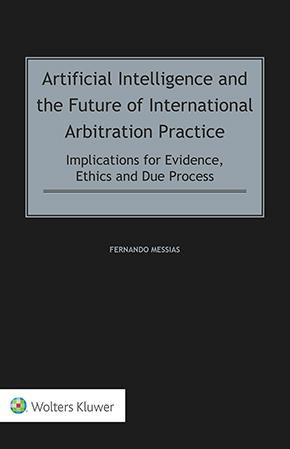
Artificial Intelligence and the Future of International Arbitration Practice is a profound work, in an authoritative and practitioner-oriented analysis of the integration of artificial intelligence into international arbitration, which examines how AI systems reshape evidentiary processes, influence adjudicative reasoning, and challenge foundational principles of procedural fairness, transparency and arbitral legitimacy.
What’s in this book:
Adopting an interdisciplinary methodology that combines doctrinal analysis, conceptual clarification, comparative regulation and institutional mapping, the author advances a normative framework for the responsible governance of AI in arbitration. Among the many issues arising in the process are the following:
The book’s scope encompasses a comprehensive examination of the regulatory framework governing the use of AI in arbitration, including the CIArb Guidelines, the EU Artificial Intelligence Act, UNCITRAL developments, and institutional initiatives. Supplementary materials include a glossary of AI and arbitration terms, case summaries and emerging jurisprudence, and institutional guideline materials.
How this will help you:
The transformations examined in this book are already reshaping the way tribunals manage large evidentiary records, rely on AI-assisted summaries, interact with algorithmically mediated procedural infrastructures, and confront emerging questions of technological asymmetry, transparency and accountability. This invaluable book provides a rich practical resource enabling arbitrators and counsel to engage in these processes in a way that recognises ethical risks and aligns AI use with emerging professional standards and regulatory expectations.
About the Author
Author’s Note
CHAPTER 1
The Convergence of Law, Technology and International Arbitration
CHAPTER 2
AI and the Transformation of Arbitral Procedure: The Technological Turn in Arbitration
CHAPTER 3
Evidence, Proof and Procedural Integrity: Evidence and Transparency
CHAPTER 4
Ethics, Due Process and Decision-Making: Ethics and Bias
CHAPTER 5
Governance, Regulation and the Future: Regulation and the AI-Ready Arbitrator
CHAPTER 6
Epilogue
APPENDICES
Institutional Guidelines in International Arbitration: Scope, Limitations, and Relevance in the AI Era
APPENDIX I
ICCA Guidelines on Standards of Practice in International Arbitration
APPENDIX II
UNCITRAL Guidelines
APPENDIX III
LCIA Guidelines
APPENDIX IV
HKIAC Guidelines
APPENDIX V
CIArb Guideline on the Use of AI in Arbitration
Glossary of AI and Arbitration Terms
Case Summaries and Emerging Jurisprudence on AI and (International) Arbitration
Publications of the Author
Index
 NEED HELP FINDING THE RIGHT SOLUTION?
Call sales at 1-800-638-8437
HAVE A QUESTION?


These cookies are necessary for the website to function. They are usually set in response to actions made by you which amount to a request for services, such as setting your privacy preferences, logging in or filling in forms. You can set your browser to block or alert you about these cookies, this may have an effect on the proper functioning of (parts of) the site.
These cookies enable the website to provide enhanced functionality, user experience and personalization, and may be set by us or by third party providers whose services we have added to our pages. If you do not allow these cookies, then some or all of these services may not function properly.
These cookies support analytic services that measure and improve the performance of our site. They help us know which pages are the most and least popular and see how visitors move around the site.
These cookies may collect insights to issue personalized content and advertising on our own and other websites, and may be set through our site by third party providers. If you do not allow these cookies, you may still see basic advertising on your browser that is generic and not based on your interests.
